














How the rule actually scales
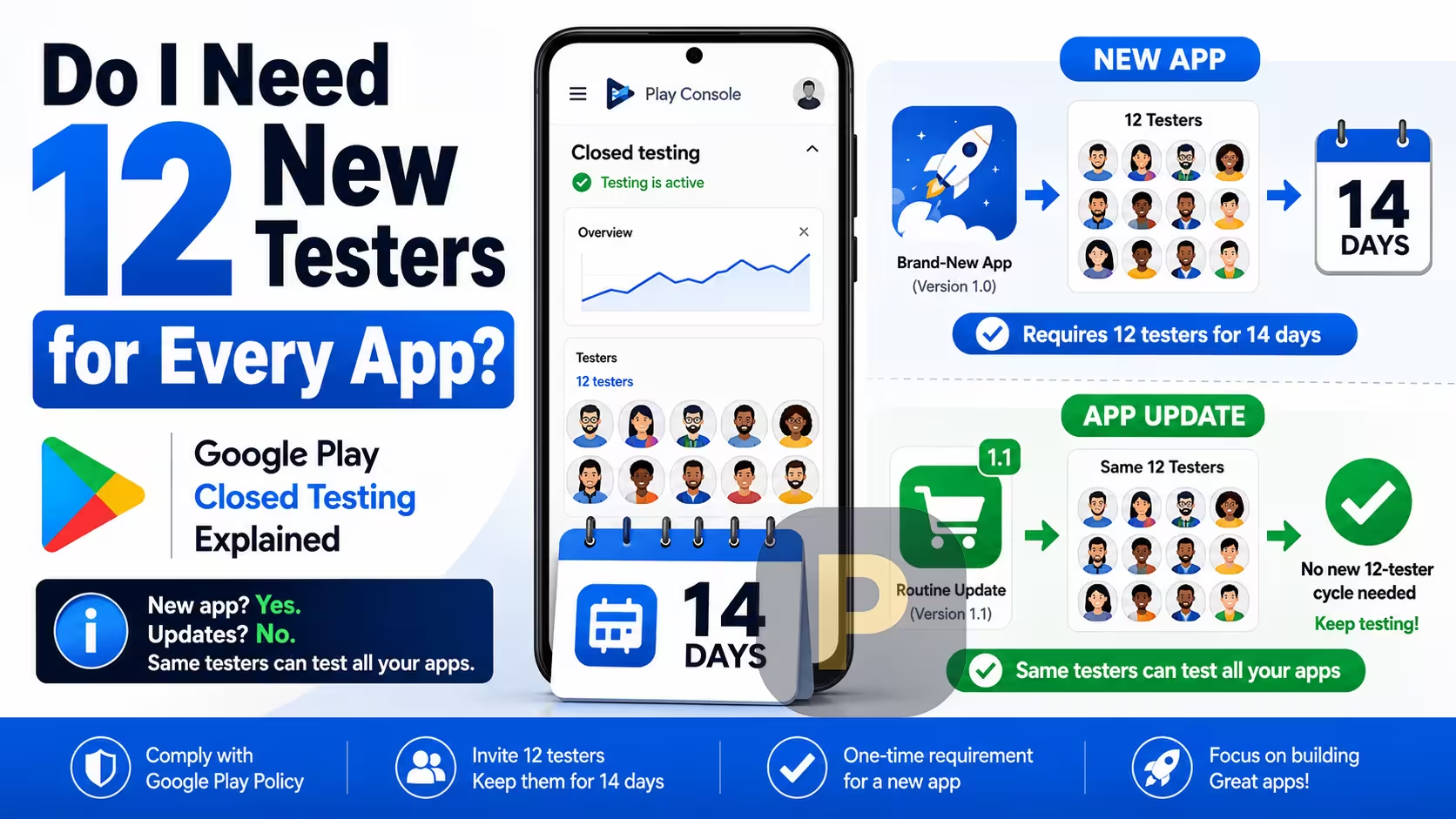
Each new app needs its own closed test, but the same people can opt in to every one - they never have to be different humans.
The gate repeats per app. The testers do not have to.
Quick Answer
For each brand-new app on a personal developer account created after Nov 13, 2023, expect to run a fresh closed test with at least 12 opted-in testers for 14 continuous days before you can apply for production access - production is unlocked per app, not per account. You do not need a new 12-tester test to ship a routine update to an app that already has production access, and the same testers can be reused across all your apps. When you need to clear that gate fast, PrimeTestLab supplies real, opted-in testers on real devices from $19.99.
It is one of the most common questions from developers with more than one app in the pipeline: once you have jumped through Google's 12-tester, 14-day closed-testing hoop once, do you have to do it all over again for the next app? Or is it a one-time account milestone you never repeat? The honest answer has three parts - and this guide separates what Google literally says from what is community consensus, so you know exactly how much to trust each claim. Current as of July 1, 2026.
What This Post Covers
Is the 12-Tester Requirement Per App or Per Account?
It is handled per app, not per account. Your first production approval is the big onboarding milestone, but each new app you publish still has its own path to production - so treat every new package name (every new applicationId) as needing its own closed test unless Play Console clearly shows otherwise.
This is where most developers get tripped up, so here is the honest version. Google does not publish a single sentence that says, word for word, "you must repeat this for every app." It also does not publish a sentence saying "once your first app is approved, all future apps are exempt." What Google does say is that the requirement applies to "your app," that production is unlocked by applying from that specific app's Dashboard, and that the policy exists to help new personal-account developers prepare their app for distribution.
Put those facts together and the most defensible reading is that production access lives at the app level, not as a one-time account checkbox. There is a nuance for later apps: once your account already has a successful production app, subsequent apps may face a different level of scrutiny - but Google's public Help Center does not promise a blanket, account-wide exemption for every future app. So the safe habit after your first approval is simple: check the status of each new app inside Play Console rather than assuming your whole account is permanently unlocked.
"I cleared it once, so my account is unlocked forever."
Developers assume the closed test is a one-time account gate. Then their second app sits in Play Console with Production locked, and the 14-day clock starts all over again - a surprise that can cost a launch window.
Production access is granted app by app.
Each new package name begins with Production locked and must independently satisfy the 12-tester, 14-day closed test. The relief: the same testers can serve every one of your apps, so you never recruit from scratch again.
How to read the confidence levels in this post. Google policy questions attract a lot of confident-sounding blog claims. To keep you safe, everything below is tagged by how solid the source is - so you know what to bank on and what to double-check in your own Play Console.
Stated verbatim on Google's Play Console Help pages. The requirement itself, the opt-in definition, and the updates recommendation live here.
Consistent with Google's wording and widely reported by developers, but not spelled out word for word. The per-app reading and reset mechanics sit here.
Repeated by some testing services but absent from Google's docs (e.g. sensor-based tester filtering). Treat skeptically; we do not restate these as fact.
What Does Google Officially Require Today?
A newly created personal developer account must run a closed test with a minimum of 12 testers who have been opted in for at least the last 14 days continuously. Meet that, and you can apply for production access from the Dashboard in Play Console.
Google Play Console Help
"If you have a newly created personal developer account, you must run a closed test for your app with a minimum of 12 testers who have been opted-in for at least the last 14 days continuously."
Play Console Help, answer 14151465 (Testing requirements for production access)
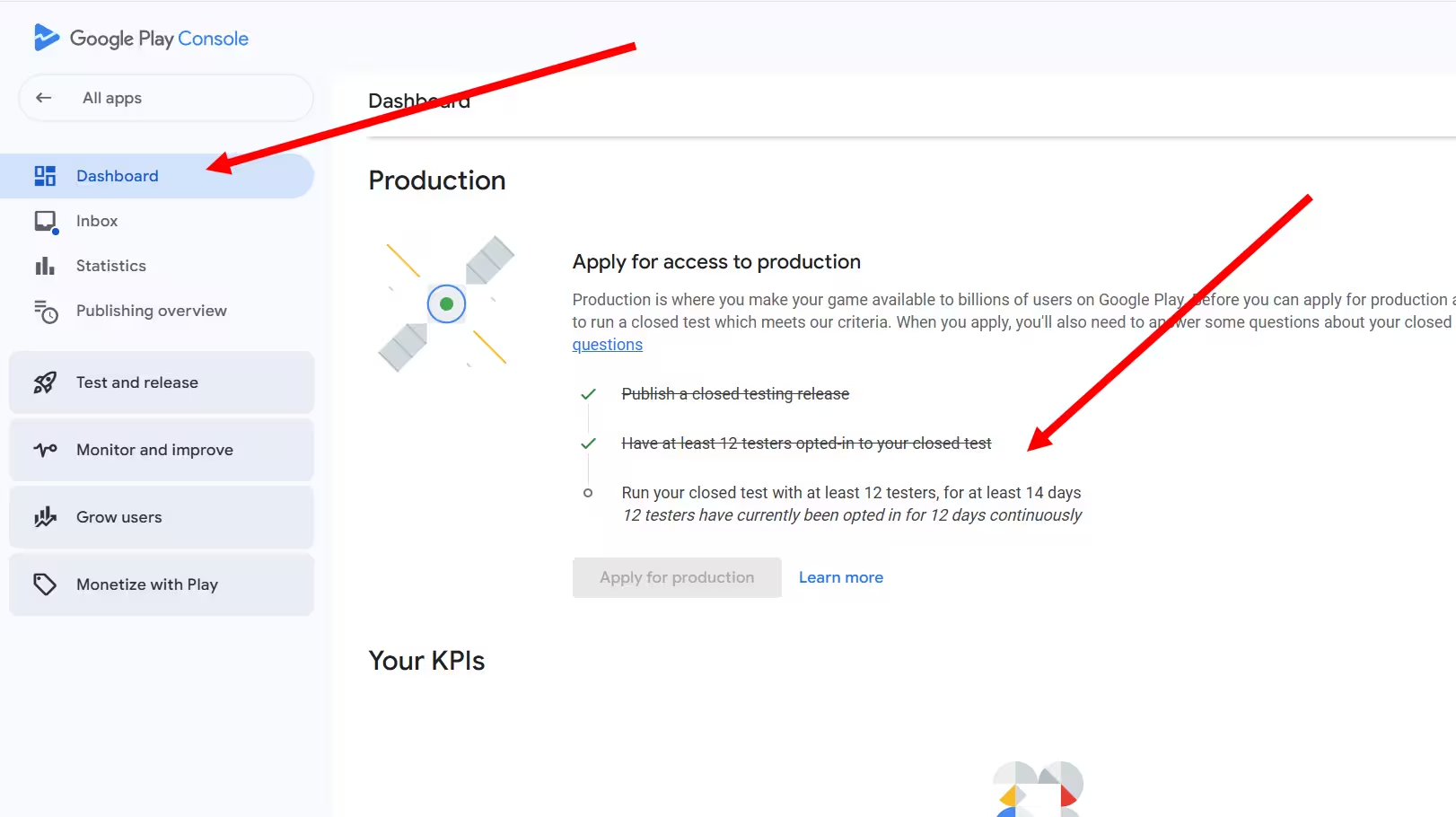
A few specifics worth pinning down, all from Google's own documentation:
Confirmed by Google
- The current minimum is 12 testers - reduced from 20 on December 11, 2024, with the 14-day duration unchanged.
- The rule applies to personal accounts created after November 13, 2023. Organization accounts are exempt.
- After you apply, production-access review usually takes 7 days or less, though it can occasionally take longer.
Where Apps Get Held Back
- Google may ask you to keep testing if you do not have 12 testers opted in.
- Or if testers were not sufficiently engaged during the closed test.
- Outdated tutorials still say "20 testers" - that number changed and is no longer correct.
That last point matters. Passing is not only about headcount - Google looks at whether real testers actually used your app. This is exactly why the 20-to-12 reduction did not make the requirement trivial: engagement still counts, which is why we cover why the number dropped in our 20-to-12 testers explainer.
When Do You Not Need 12 New Testers?
If your app already has production access and you are shipping a normal update to that same app, you do not need to recruit 12 new testers and wait another 14 days just to publish it. The closed test is a gate to first-time production access, not a recurring toll on every release.
Google says that after a successful production-access application you can publish to production, and that it recommends testing future updates routinely. The word "recommends" is doing real work here: ongoing testing is a best practice, not a fresh mandatory gate for every production update. Google's testing documentation also notes that when you run closed testing for an app you have already published, only users in your test group receive the closed-test build as an update - which only makes sense because the app already exists in production.
Brand-new package name
Expect a fresh 14-day closed test
- A new
applicationIdnever published before - Production is locked until you clear the test
- Needs 12+ opted-in testers for 14 continuous days
Update to an approved app
No new 12-tester test required
- Same package name, already in production
- Just push the new version to production
- Testing future updates is recommended, not mandated
So the clean rule is: new app, expect yes; update to an existing production app, no. If nothing changed except the version of the same listing and the same package name, a brand-new 12-person closed test is not the standard requirement. One caveat worth flagging: pushing a new build during your very first closed test is different from updating an already-approved app - we untangle that in does updating reset closed testing.
Do the Testers Have to Be New People Every Time?
No. Even when a new app needs closed testing, the 12 testers do not have to be 12 completely different people. Google lets you reuse the same tester email list for future tests on any of your apps - the same Google account can be a tester for as many of your apps as you like.
That is the clearest official signal that one set of testers can serve your whole catalog. What actually matters is not novelty. It is that, for the app you are moving to production, at least 12 testers are actively opted in to that app's closed test and stay opted in for 14 consecutive days.
So each app still runs its own 14-day gate, but the people filling it can be the same every time. That reframes the whole problem: build a dependable tester pool once, and every future launch reuses it. Here is what that means for a multi-app roadmap:
Interactive
Portfolio Planner
How many closed tests will your roadmap need - and how many testers?
3 apps = 3 separate closed tests, but still just one pool of 12 testers if you reuse them. Run tests in parallel and the calendar time collapses - it is only 42 days if you run them strictly one after another.
What Counts as an Opted-In Tester for 14 Days?
The 14 days must be consecutive. Google will not count testers who opt in, test for less than 14 days, then opt out - even if they later opt back in so the total adds up to 14 days.
Google Play Console Help
"This means that we won't count testers who opted in, tested for less than 14 days, and then opted out. Even if they opt back in so that they are opted in for a total of 14 days, these 14 days must be consecutive to count."
Play Console Help, answer 14151465 (FAQ)
Two practical implications follow, and both trip up first-timers:
This counts
- A tester who clicks the official opt-in link and accepts it on a device signed in with that Google account.
- Staying opted in for the full 14 continuous days without opting out.
- Genuine, ongoing engagement - actually opening and using the app.
This does NOT count
- Merely adding an email address to your tester list - the person still has to accept the opt-in.
- A broken streak: opting out mid-window and rejoining restarts the consecutive count.
- A tester stuck in your internal test - they must opt out of internal before joining the closed test.
The Buffer Rule (Community Consensus)
If testers drift away and your active count drops below 12 mid-window, the continuous streak can break and effectively restart the clock. Google does not publish the exact reset algorithm, but this behavior is consistent with its "continuously" wording - and it is why experienced developers recruit a buffer of 15 to 25 testers rather than exactly 12. We break down the streak mechanics in the 14 consecutive days guide.
Do You Need a New 12-Tester Test? Find Out
Every situation is a little different. Pick the one that matches yours and get a straight answer, plus what to do next.
Interactive
The New-Test Checker
Choose your scenario to see whether a fresh 14-day closed test applies.
Yes - run a full closed test
New test requiredThis is the classic case. Before you can apply for production, you need at least 12 testers opted in for 14 continuous days. Start it on day one - it is the longest fixed step in your whole launch.
Next step: recruit a buffer of 15 or more so a single dropout never resets your clock.
Yes for the app - but reuse your testers
New test, same peopleEach new package name gets its own 14-day closed test, so plan for one. The good news: the same tester list can opt into this app too - you do not need 12 fresh humans.
Next step: point your existing tester pool at the new app's opt-in link and confirm at least 12 are active.
No - just publish the update
No new testAn app that already has production access does not re-earn it. Shipping a routine update to the same package name does not trigger a new closed test. Testing updates is recommended, not required.
Next step: roll out your new version to production as normal.
No - your account predates the rule
ExemptThe closed-testing requirement applies to personal accounts created after November 13, 2023. An account created on or before that date is not subject to it.
Next step: confirm your account creation date in Play Console before you rely on this.
No - organization accounts are exempt
ExemptOrganization / business accounts are not subject to the 14-day closed-testing requirement at all. The trade-off is heavier setup: a registered business and a D-U-N-S number.
Next step: weigh the paperwork in our personal vs organization guide.
How Do Internal, Closed & Open Tracks Fit Together?
Google offers three testing tracks, but only one - closed testing - satisfies the production-access requirement. Internal testing does not count toward it, and open testing only unlocks after you already have production access.
Internal
Up to 100 testers, fastest builds
- Great for quick QA and smoke tests
- Delivers builds almost instantly
- Testers must opt out before joining a closed test
Does NOT count toward the requirement
Closed
12+ testers, 14 continuous days
- The mandatory track for new personal accounts
- Runs per app, on each new package name
- Testers can be reused across all your apps
Required before applying for production
Open
Public, anyone can join
- Good for wide beta feedback at scale
- Listed publicly on your store page
- Only available once you have production access
Unlocks after production access
The fact that open testing only appears after production access is another quiet confirmation that production approval is tied to each app's own release setup - not granted account-wide. If you are choosing between tracks, our internal vs closed vs open testing breakdown covers each in depth.
How Does the Production Access Review Work?
After you have 12 or more testers opted in continuously for 14 days, you apply for production access from the Dashboard. Google's questionnaire covers three areas, and the review usually takes 7 days or less.
The questionnaire asks about your closed test, about your app, and about production readiness. Google uses these answers to confirm that apps have been properly tested before they reach the public. If you are asked to keep testing, the two most common reasons Google cites are not having 12 testers opted in, and testers who were not engaged with your app during the test.
The Pro Move
Because production access is granted per app, your questionnaire answers matter for every new app - not just the first. Keep a short template describing how you recruited testers and how they engaged, and adapt it for each launch. Vague, one-line answers are a common reason first-time applications get bounced back.
Two 2026 Deadlines to Keep on Your Radar
These are separate from the closed-testing requirement, but they affect the same launch timeline - so plan around them. Note the confidence badges: one is Google's stated plan, the other is a confirmed program.
Target API level rises to 36
Planned for August 2026
Google plans to require new apps and updates to target Android 16 (API level 36), following its usual yearly cadence. As of mid-2026 the exact date had not yet replaced the previous requirement on Google's official target-API policy page - so treat it as Google's stated plan and confirm the live date in Play Console before you rely on it.
Android Developer Verification
September 30, 2026
Google will begin requiring app registration by verified developers in Brazil, Indonesia, Singapore, and Thailand, with a wider global rollout in 2027 and beyond. This is an identity check that confirms who you are - entirely separate from proving your app works through closed testing.
Keep the two apart: developer verification confirms who you are; closed testing confirms your app works. Neither replaces the other. For the full 2026 launch checklist, see our Google Play publishing requirements guide.
How PrimeTestLab Helps You Pass, App After App
Because the closed test repeats for every new app, a reliable and repeatable source of real testers pays off across your whole catalog - not just once. PrimeTestLab provides real, opted-in human testers on real Android devices, spanning Android 7 through Android 17 and 120+ countries, so you hit the 12-tester requirement without chasing friends and colleagues for every launch. Testing starts within 4-6 hours, and we have supported 9,800+ apps at a 99.9% success rate.
You share your closed-test opt-in link. We handle invitation, opt-in verification, and full 14-day retention, so one tester dropping out never breaks your streak and resets the clock. Every plan uses real testers with genuine engagement, which is exactly what Google evaluates.
Current Packages
- Meets Google's minimum
- Real Android devices
- Full 14-day coverage
- Buffer absorbs dropouts
- Best device diversity
- Strongest first-attempt rate
- Safety buffer included
- Better device diversity
- Higher approval confidence
+5% service fee on plans
Frequently Asked Questions
Do I need 12 testers for every app I publish on Google Play?
For a new app on a personal developer account created after November 13, 2023, expect yes: each new app needs its own closed test with at least 12 opted-in testers for 14 continuous days before you can apply for production access. Routine updates to an app that already has production access do not require a fresh 12-tester test.
Can I reuse the same testers for multiple apps?
Yes. Google lets you reuse the same tester email list for future tests on any of your apps, so the 12 testers do not have to be 12 different people each time. What matters is that at least 12 of them are actively opted in to the specific app you are moving to production, and that they stay opted in for 14 consecutive days.
Does updating my app restart the 14-day clock?
No. Once an app has production access, shipping a routine update to that same package name does not trigger a new closed test. Google recommends testing future updates as a best practice, but it does not require re-earning production access every time you publish an update to an already-approved app. Full details here.
Do organization accounts need 12 testers too?
No. The closed-testing requirement applies to personal developer accounts created after November 13, 2023. Organization accounts are not subject to it, though setting one up requires establishing a registered business and providing a D-U-N-S number, which takes its own time and paperwork. Compare account types.
What happens if a tester drops below the count during the 14 days?
If your active opted-in count falls below 12 mid-window, the continuous streak can break and the clock effectively restarts. Google does not publish the exact reset mechanics, but this matches its "continuously" language. Recruiting a buffer of 15 to 25 testers instead of exactly 12 protects you from one dropout costing you two weeks.
Is it against Google's rules to pay for testers?
Recruiting real testers, including through a paid provider, is not prohibited, and Google's own production-access questionnaire even lists a paid testing provider as an example. What Google's policies do prohibit is fake accounts, emulators, and simulated engagement, which risk account suspension. That is why real testers on real devices with genuine engagement is the compliant approach.
Bottom Line
Summary
You do not need 12 brand-new testers every single time you touch Google Play. For a new app on a new personal account, assume it must clear the 12-tester, 14-day closed test before production, because Google gates production access around each individual app. Once an app already has production access, routine updates do not require a fresh closed test, and the same testers can be reused across apps. When you need to clear that gate quickly and safely, PrimeTestLab supplies real, opted-in testers on real devices from $19.99. See pricing plans →